
Back Pay is a short narrative animation that depicts a violent act through the theory of the Uncanny. As an eerie silence falls over a small town intersection, two men fight in a parking lot. A flock of starlings watches from the wires above.
Short Film
Spring 2018
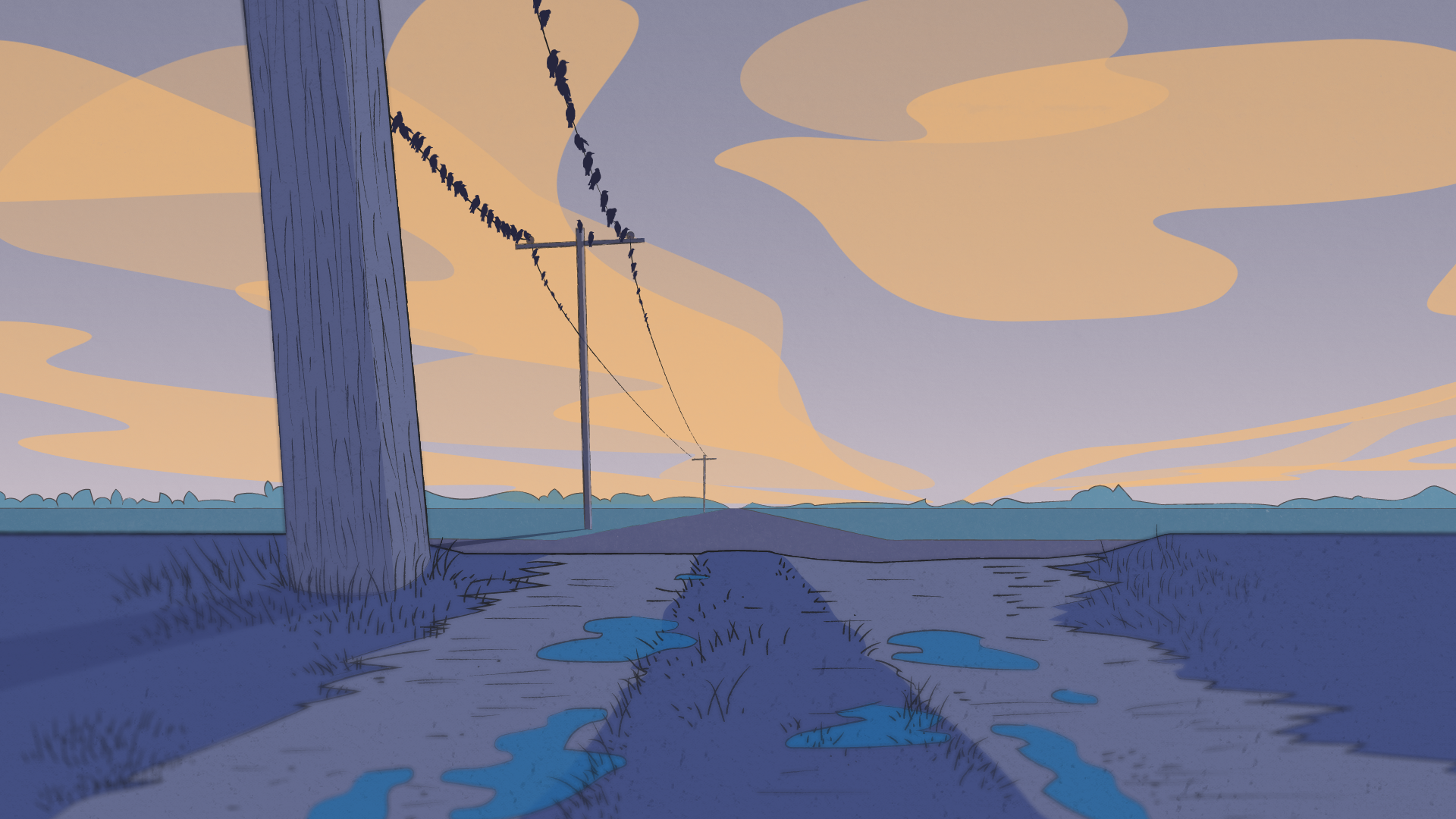
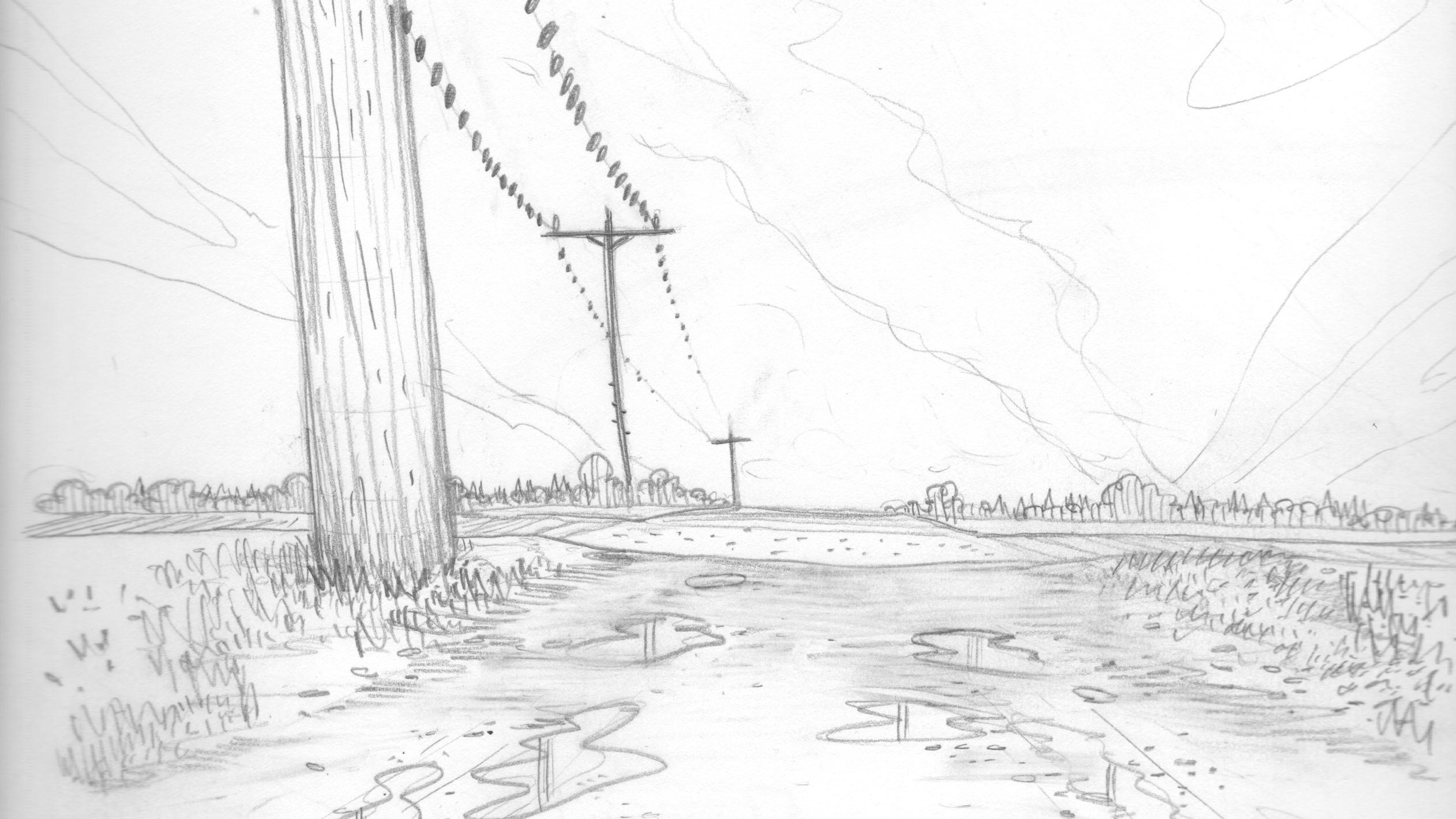
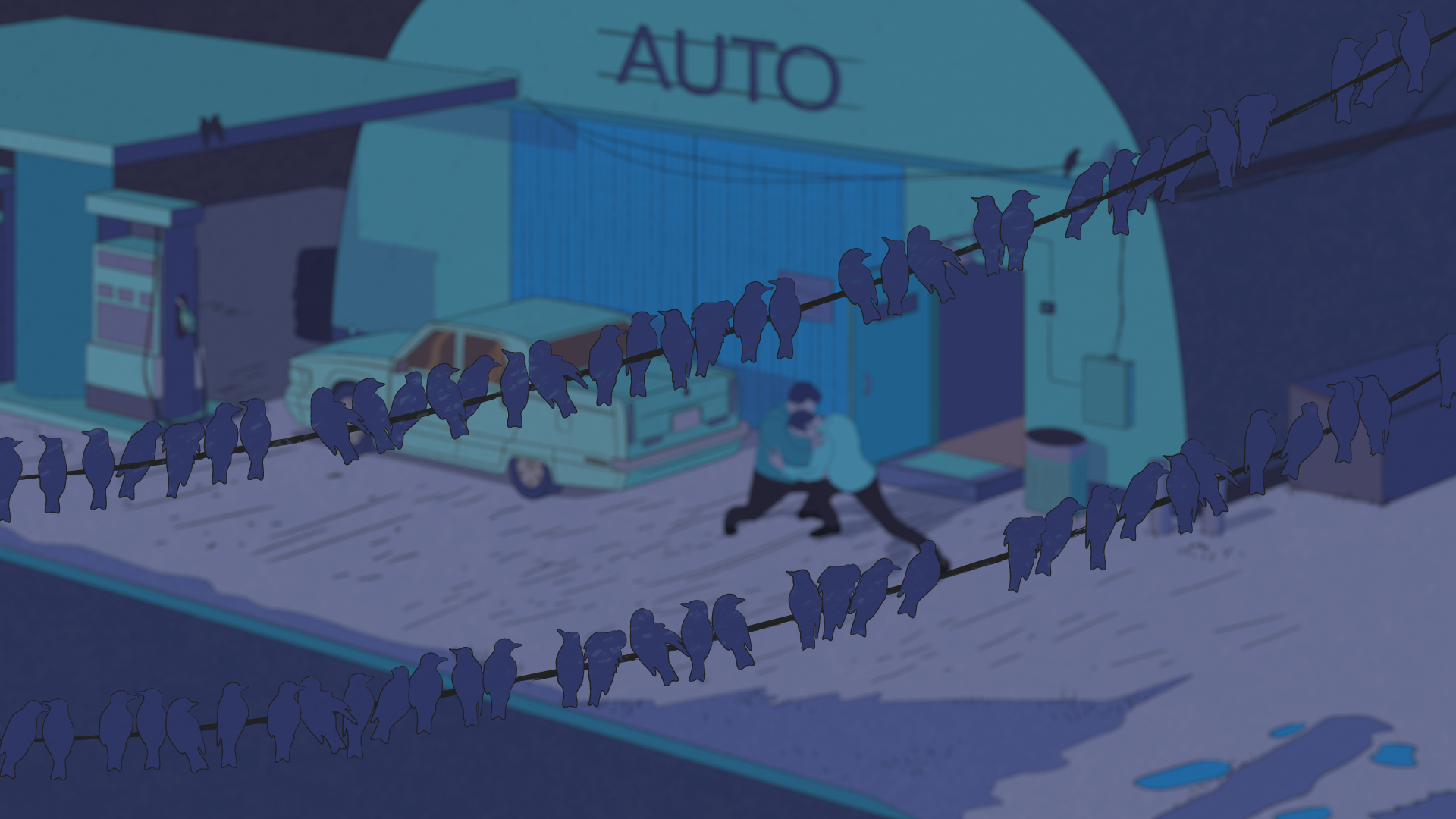
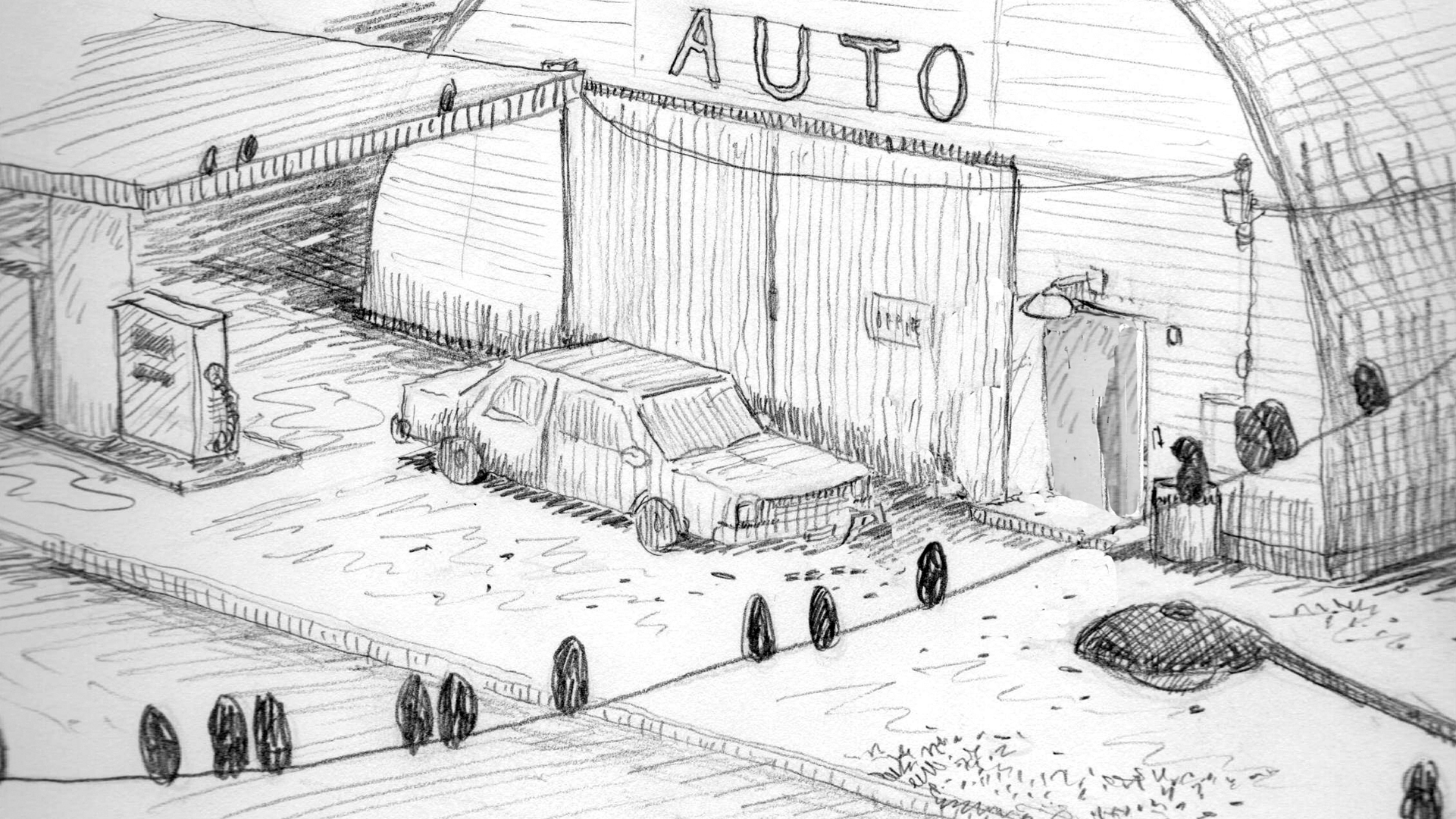
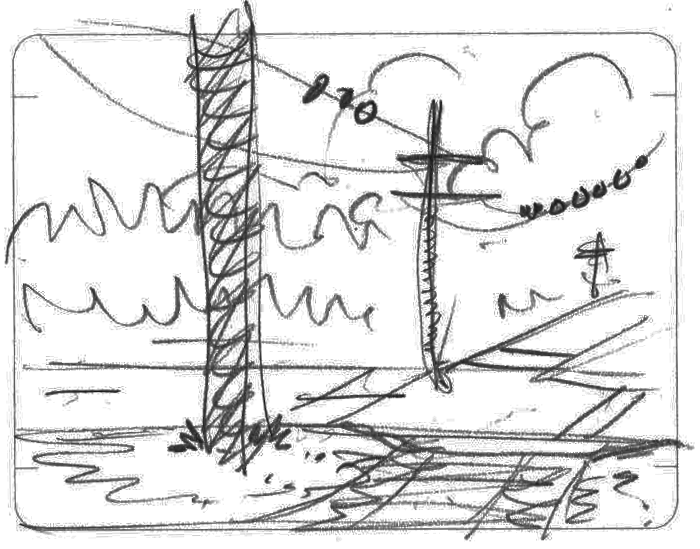
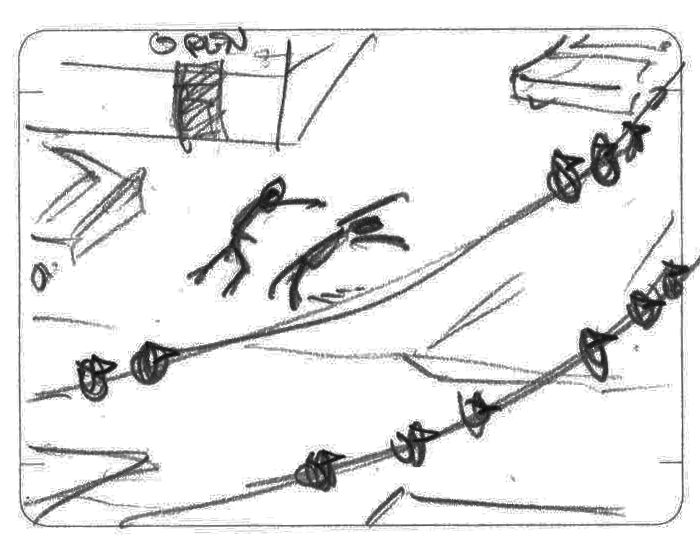
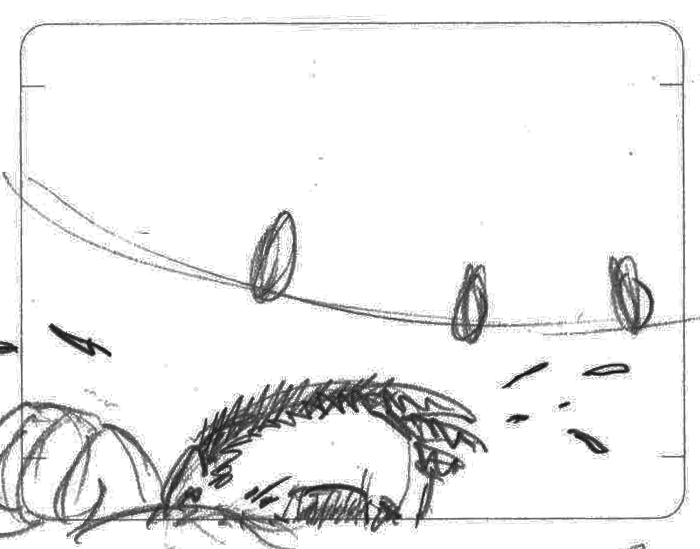
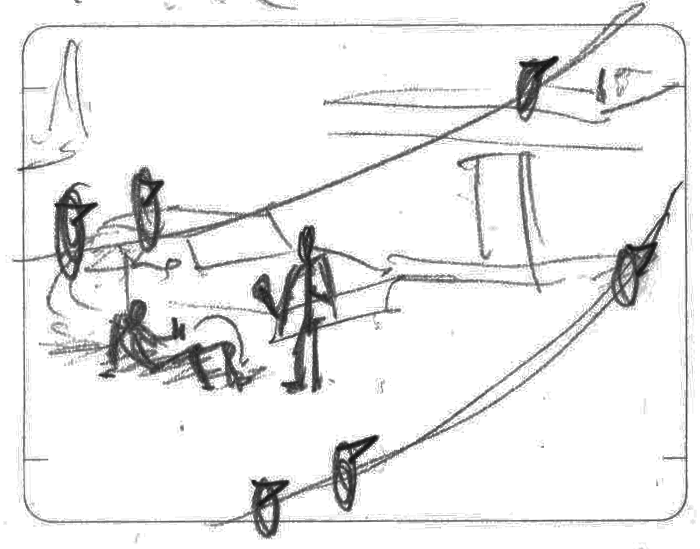
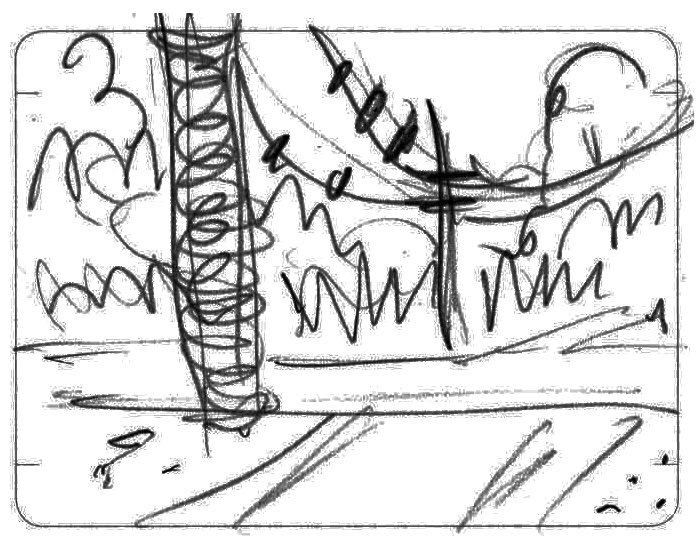
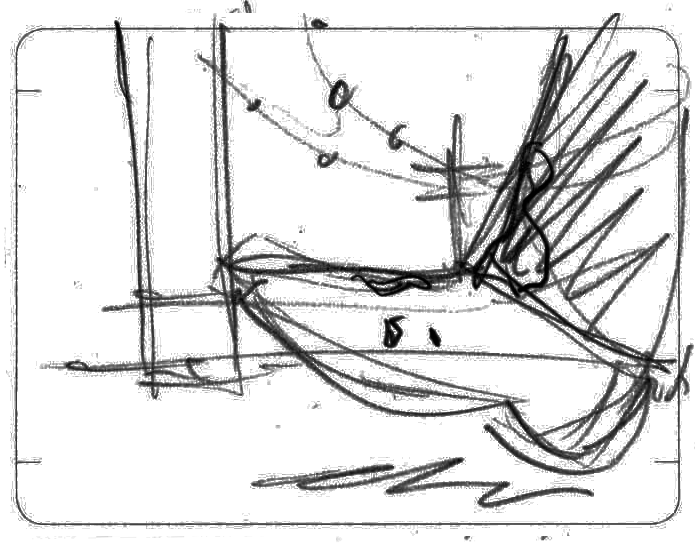
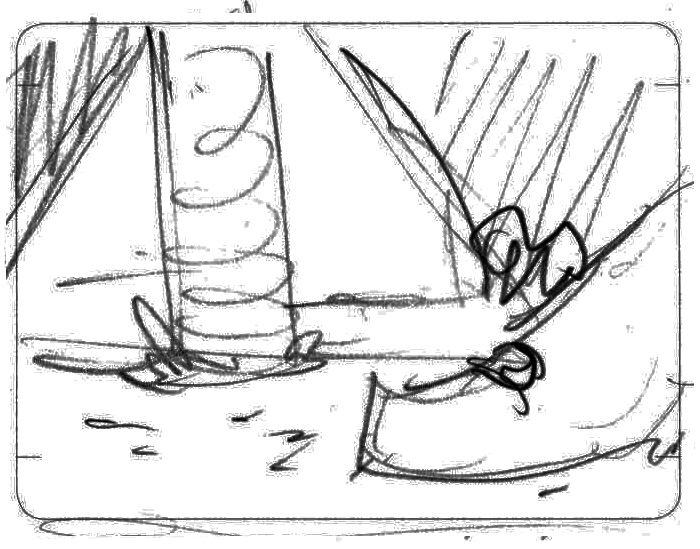
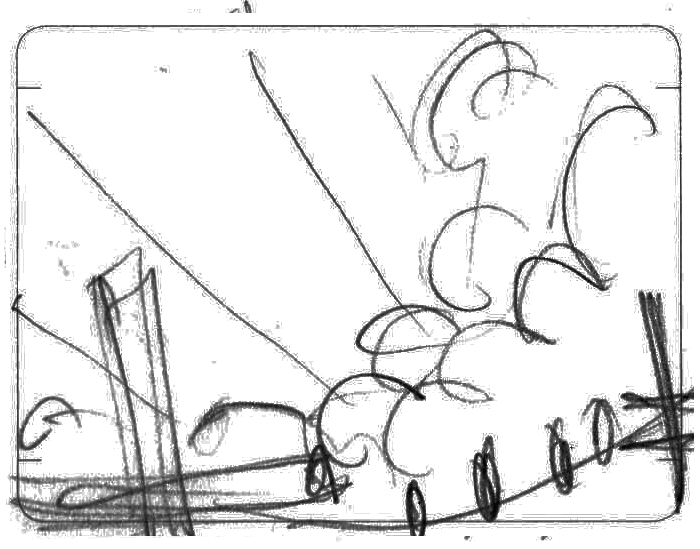
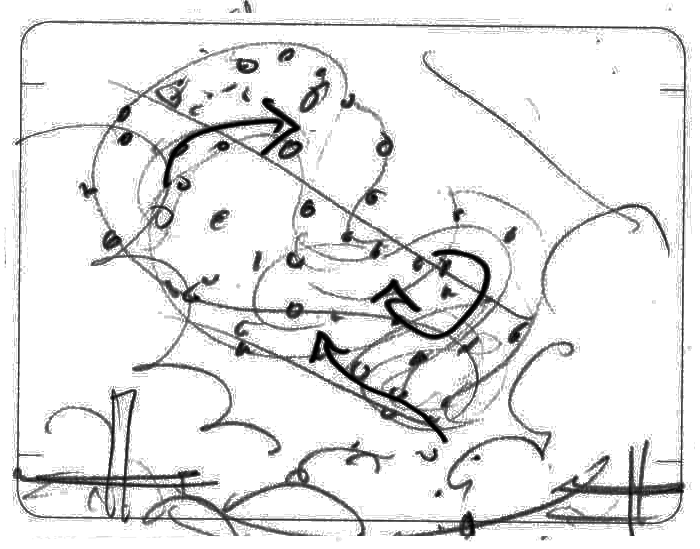
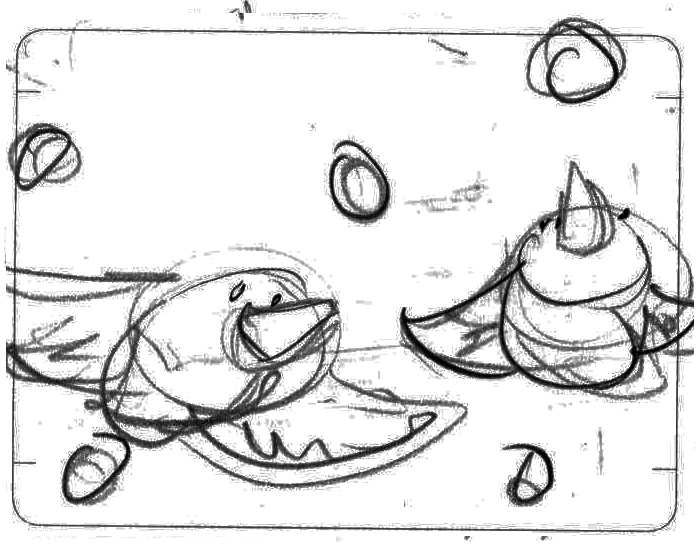
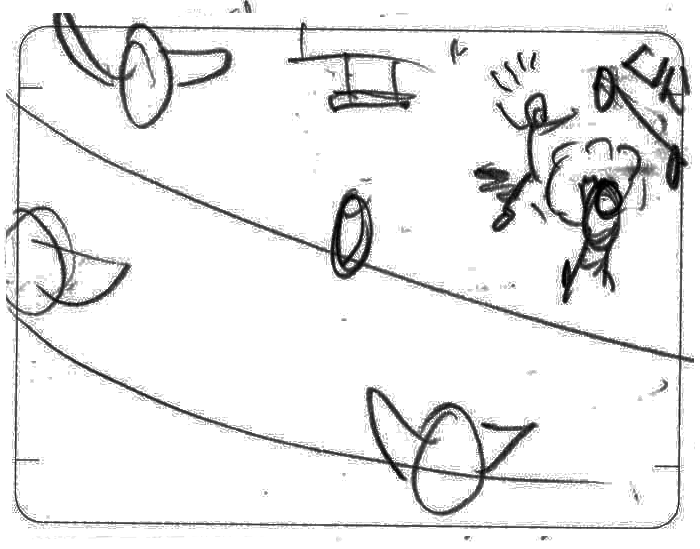
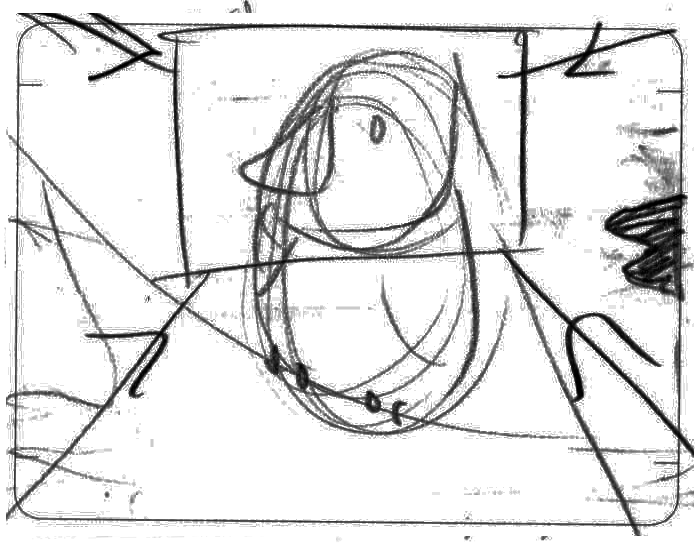
The rural setting is used to establish a familiarity – literally showing the natural world to ultimately highlight the metaphysical nature of death. The Pastoral scene is meant to convey nature in the romantic sense: a comforting source of spiritual and physical sustenance. Many slasher movies from the late 70’s and early 80’s use pastoral and rural settings to contrast the horrific nature of the narrative’s action: the natural order is violated in the middle of the natural world. The theme of physical sustenance is also used in the scene’s location: the parking lot of a small business.
The audio serves as the main vehicle for the semiotic disordering of the action. Ambient noise, crickets and birds chirping in the distance – these soundscape tropes signify realism and set the audience’s expectations for the familiar natural setting. The silence is broken as two men struggle with each other in the parking lot. The idyllic scene is dominated by the sounds of their struggle until the final act of violence.
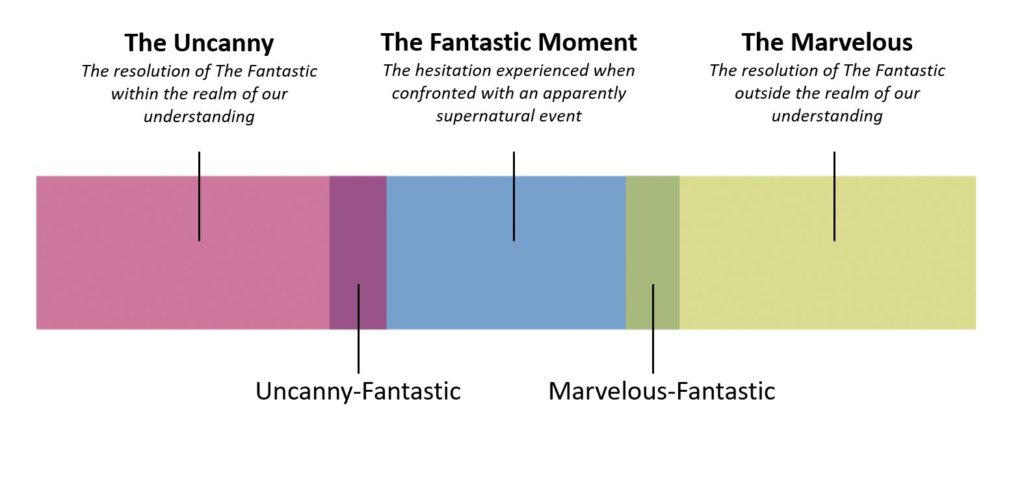
There are several main contributors to the theory of The Uncanny – beginning with Ernst Jentsch who described the phenomenon as a semiotic disordering – where the familiar is made unknown. Jentsch’s work was expounded upon by Freud who saw the existence of the uncanny as proof of an underlying repression, and Todorov, who classified the uncanny as a neighboring genre of The Fantastic.
As Roy sellers points out in his introduction to his translation of Jentsch’s “On The Psychology of The Uncanny”, Jentsch emphasizes that the uncanny arises from an experience of the uncertain or the undecidable. Whereas Freud believed the uncanny to be the manifestation of repressed morbid anxiety; not something foreign or novel, but something base and ingrained – like the castration complex or womb fantasies. While the work of these men has been enormously influential – It is with the work of Todorov that the true nature of the phenomena come into focus.
Todorov analyzes the structure of the uncanny as beginning with a fantastic moment. The fantastic is:
“That hesitation experienced by a person who knows only the laws of nature, confronting an apparently supernatural event. The concept of the fantastic is therefore to be defined in relation to those of the real and those of the imaginary”
The Uncanny is only one possible resolution of the fantastic moment. When the supernatural hesitation is resolved within the framework of known facts, or previous knowledge, the fantastic moment becomes uncanny. If the hesitation resolves into an unknown phenomenon it becomes marvelous.
Back Pay is an attempt to use Jentsch’s theory of semiotic disordering to convey a fantastic moment as described by Todorov – a supernatural event that suggests a world beyond our understanding -, while imbuing the entire animation with an implied uncanniness through what Freud referred to as the castration complex: film is a visual medium, and the main action throughout the piece is unseen.
The title is a reference to the semiotic disorder used in the narrative: Back Pay gives the narrative context but is also a disordering of Payback – an act of revenge.
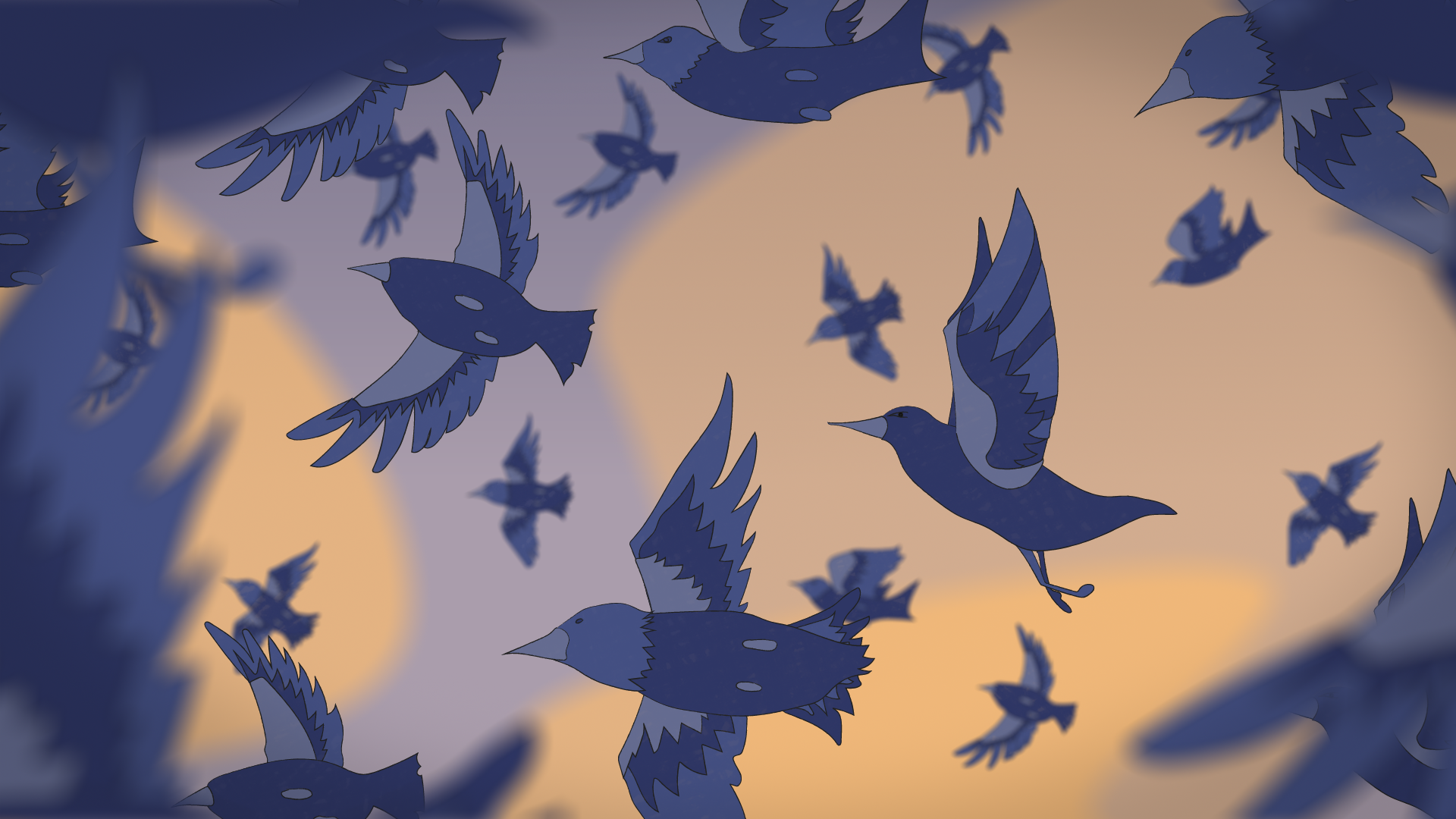
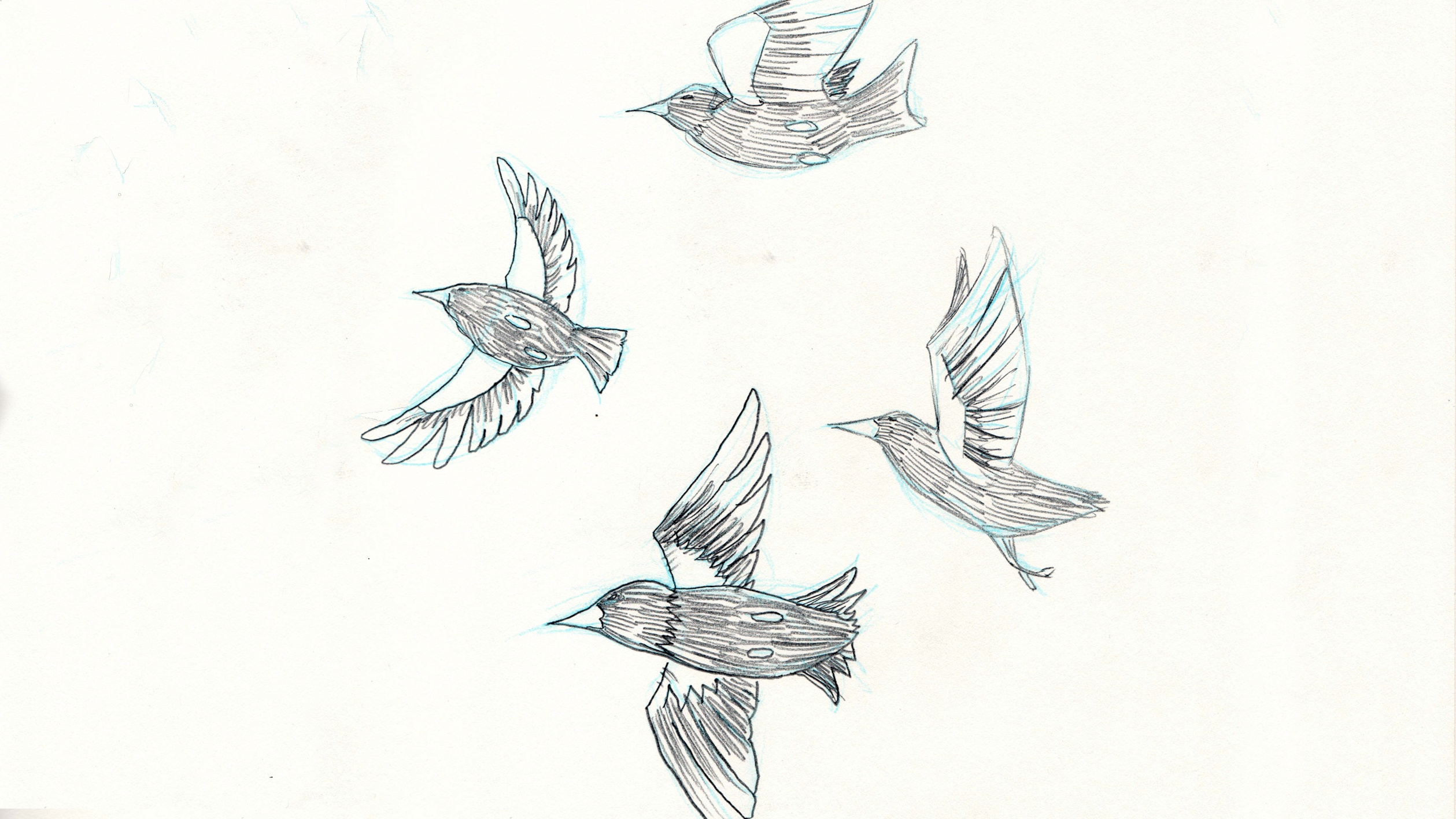
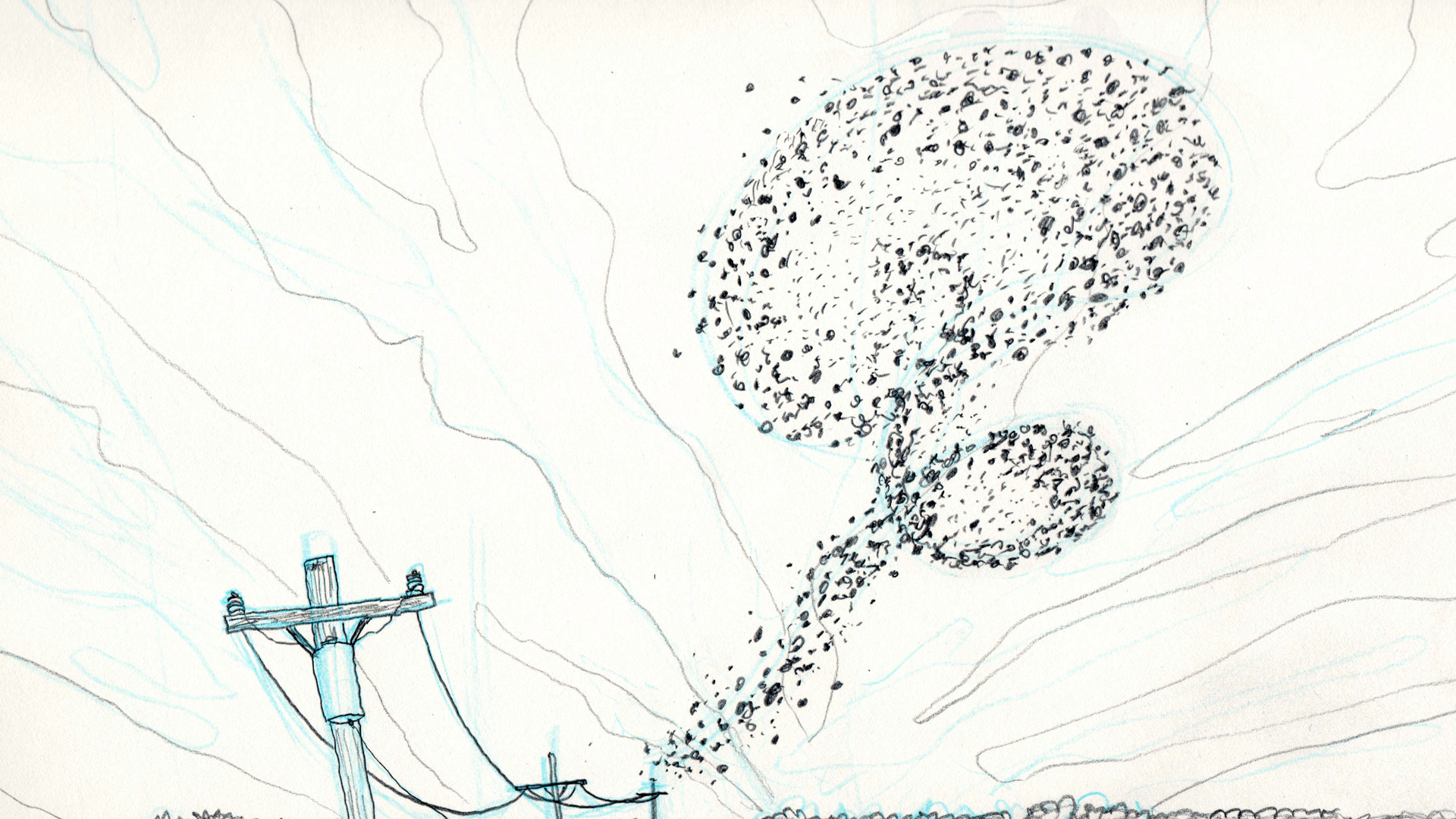
The juxtaposition of the pastoral scene and the sounds of violence transforms the familiar into the uncanny. There is also an implicit uncanniness in that the fight between the two men is never fully shown. We are unaware of the circumstances that caused the struggle between them, and there is no clear hero to support. While this technique can be described in Freudian terms of castration – through denying the audience the visual representation of the violence ( essentially blinding them) – I think the unseen action builds suspense and provides the hesitation that is inherent to The Fantastic as described by Todorov.
What may cause a single bird to remain when the entire flock scatters en masse? We do not know. But The notion that a bird may have a mind of its own, that a wild animal may possess reason, again alludes to man’s ignorance of the natural world.
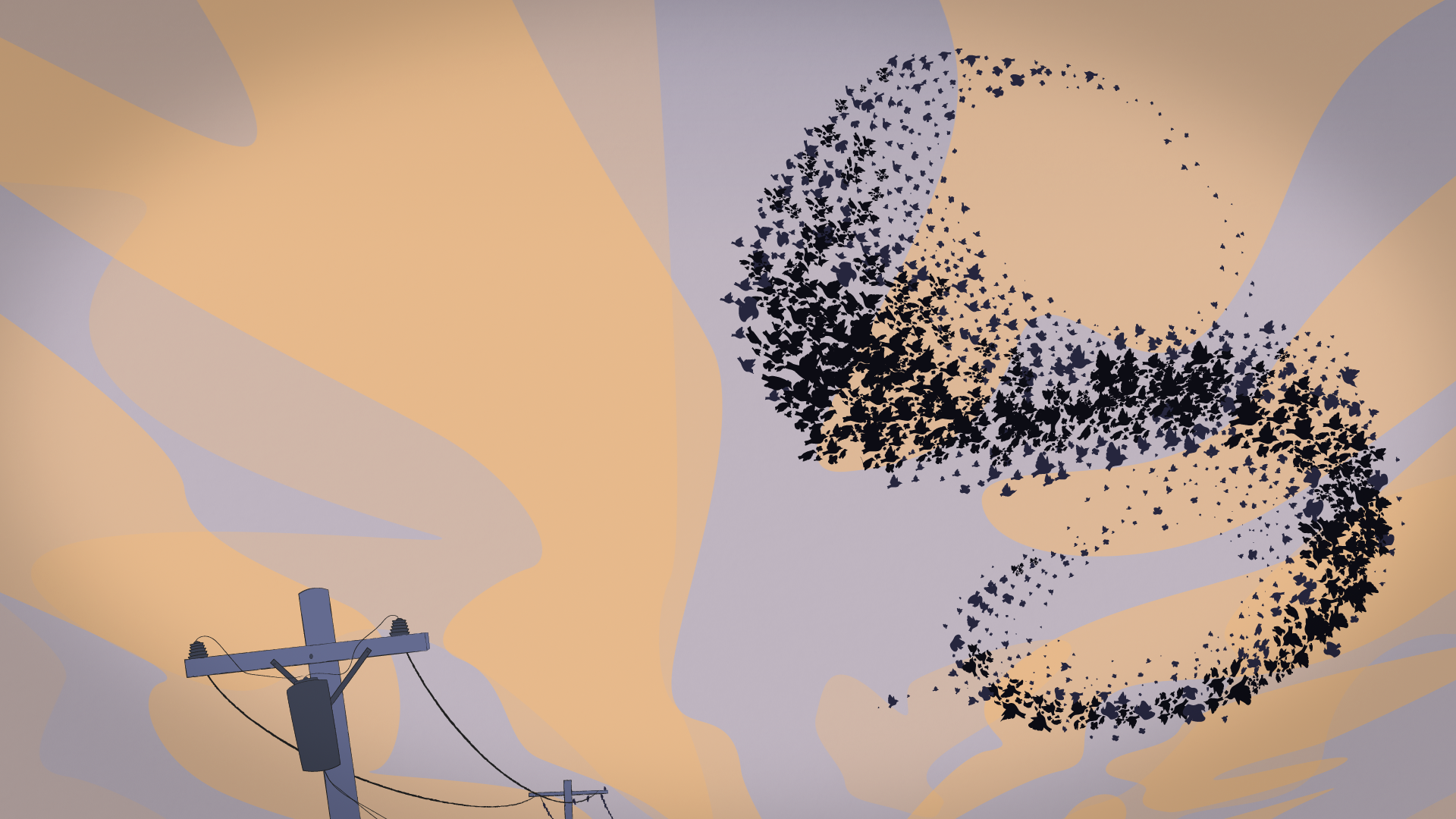
The moment resolves into the uncanny-fantastic when the murmuration freezes in mid-air. The ambient sounds of the pastoral scene are replaced by stark chamber music. While The formation of the starlings signifies the metaphysical nature of death and suggests the presence of phenomena beyond our understanding.